
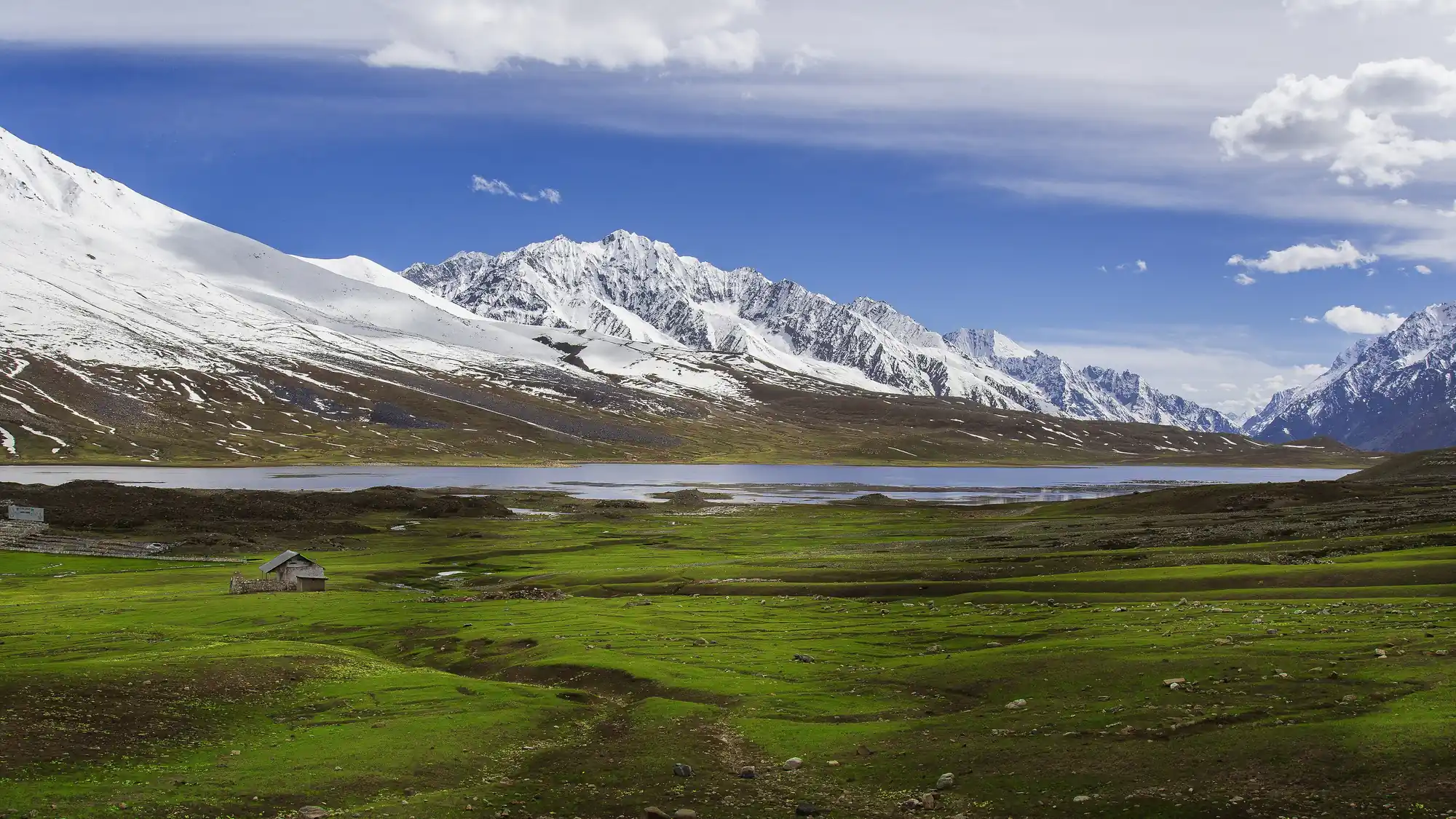
Shandur Pass has a reputation that precedes the road. At roughly 3,700 metres on the divide between Ghizer and Chitral, it hosts what locals proudly call the highest polo ground in the world — and each July, teams from Gilgit-Baltistan and Khyber Pakhtunkhwa meet for a festival that feels equal parts sport, picnic, and mountain pilgrimage. Even when the polo sticks are packed away, the plateau draws travellers for wide-open grassland, scattered tarns, and horizons that seem to curve with the earth.
Getting there from Gahkuch is not trivial. The drive is long, the weather fickle, and altitude real. This guide explains the history of the pass, when to go, how the road works, what the festival involves, and how to prepare so Shandur becomes a highlight rather than a cold, foggy disappointment.
History of Shandur Pass
Polo arrived in this region centuries ago as a cavalry exercise — a way to simulate battle on horseback across Central Asia. By the early twentieth century, British administrators in the Northern Areas recognised Shandur’s flat plateau as a natural gathering place between Chitral and Gilgit. In 1935, Nambardar Niat Qabool Hayat Kakakhel of Chitral was asked to help build a polo ground here; locals completed the work and the field became known as Mas Junali — from Khowar words meaning moon and polo ground.
The pass has since served as a seasonal link between valleys, a grazing plateau for herders, and the symbolic meeting point where Gilgit-Baltistan and KPK teams still face each other each July. Trout introduced to regional streams at the request of local leaders during that era remain part of Ghizer’s fishing story today. Standing on the plateau, you are on a historic corridor — not a theme park replica of mountain culture.
What Is Shandur Pass?
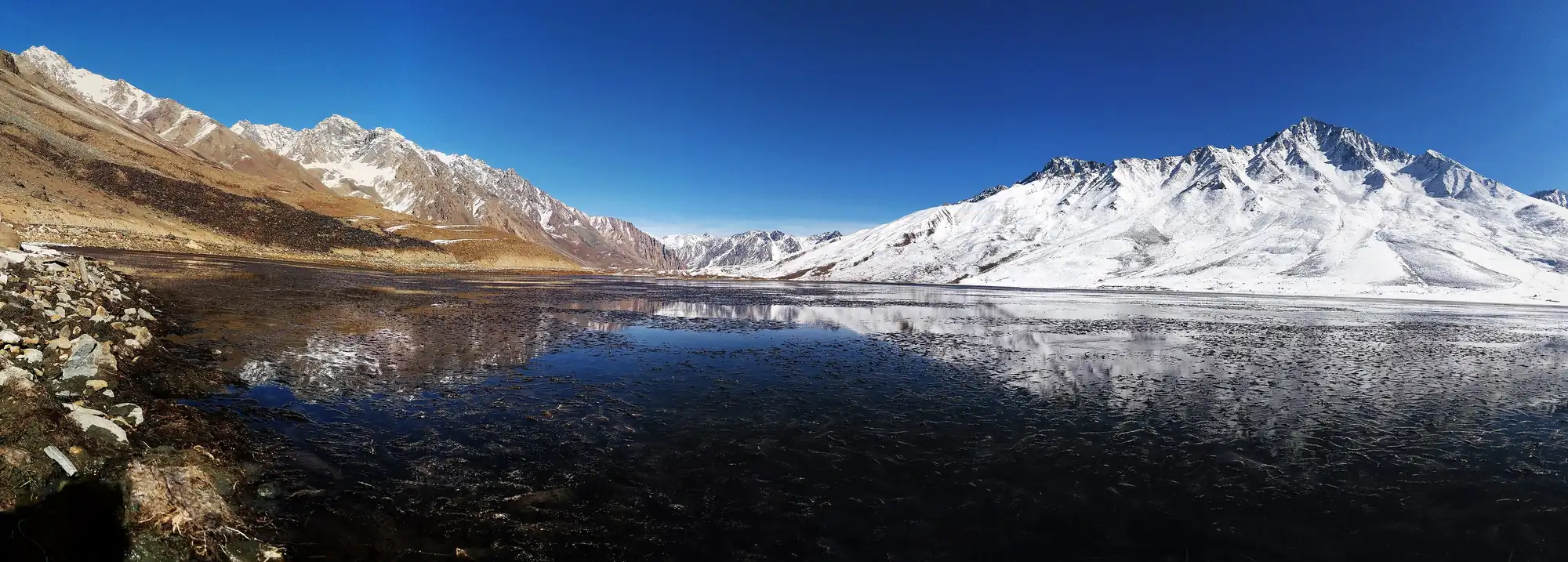
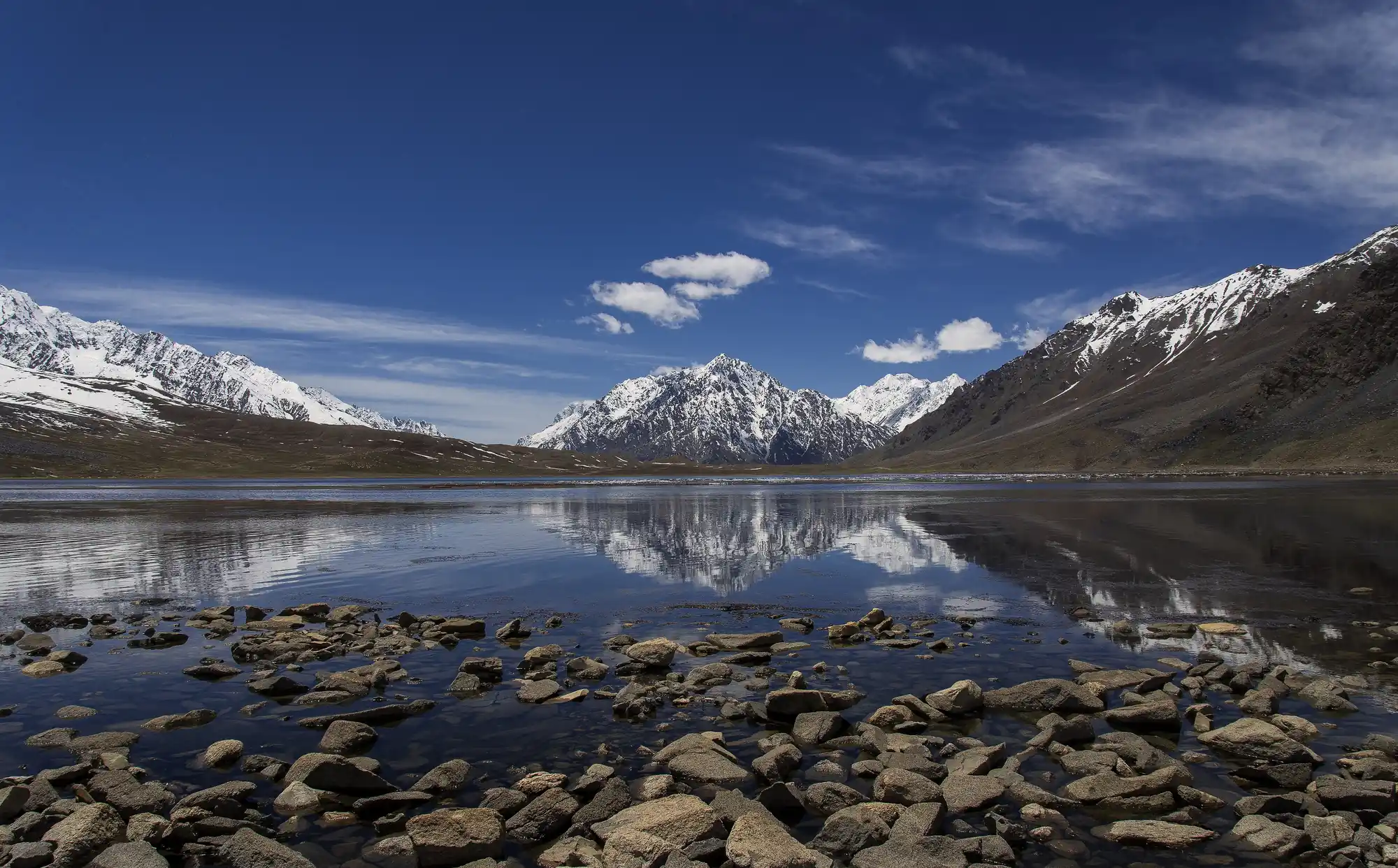
Shandur Top sits on the boundary between Ghizer district in Gilgit-Baltistan and Upper Chitral in KPK, Pakistan. Geography books classify it as a high mountain pass; travellers remember it as a flat, wind-scoured expanse where snow lingers into summer and wildflowers explode in brief windows between melt and frost.
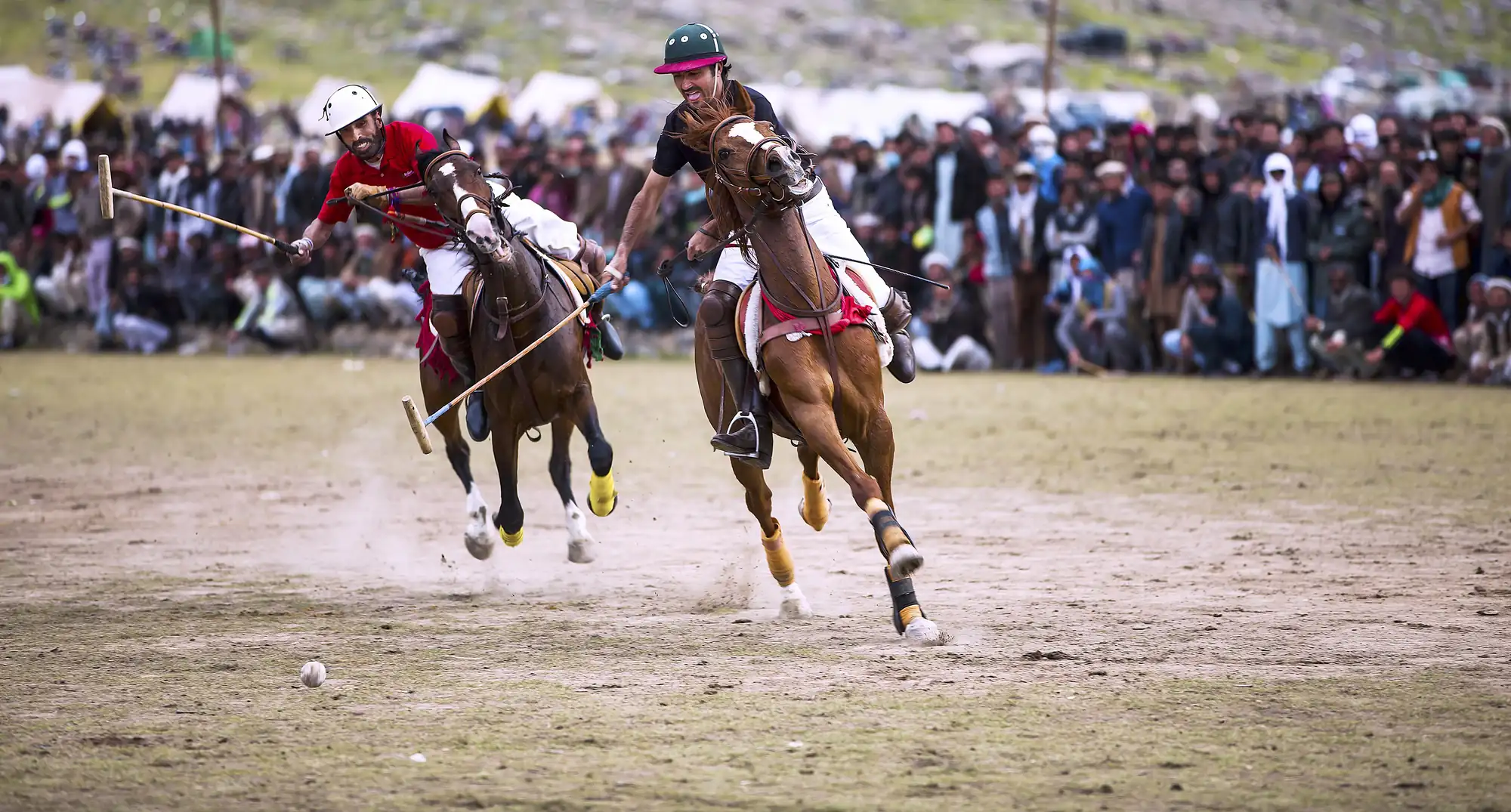
The polo ground is a level field marked for matches that follow rules distinct from standard international polo — fewer players, rawer terrain, horses bred for stamina on rough ground. Matches during the festival are social events: crowds ring the field, music drifts from tents, and the mountains frame everything without asking for attention.
Outside festival week, Shandur is quieter — herders, occasional jeeps, campers willing to brave cold nights. The same landscape reads differently without noise and colour, more contemplative, sometimes eerily empty under low cloud.
Shandur Polo Festival
The Shandur Free Style Polo Festival usually runs for several days around 7–9 July, though exact dates shift yearly — confirm with tourism offices in Gilgit or Gahkuch before booking flights. Gilgit-Baltistan and Chitral teams compete; spectators arrive by jeep convoy from both sides of the pass. Temporary camps, food stalls, and basic sanitation appear for the event; infrastructure is festival-grade, not city-grade.
Festival Survival Tips
- Book Gahkuch accommodation weeks ahead — Green Palace Hotel and peers fill quickly.
- Expect traffic jams near the polo ground; walk the last segment if drivers suggest it.
- Carry sun protection and warm layers in the same bag — UV is fierce, wind is cold.
- Cash only for most vendors; ATMs are distant and unreliable.
- Respect local customs around seating, photography, and gender-mixed areas.
The festival is not a ticketed stadium event in the Western sense. Access is generally open, but space near the field fills early. Arrive the day before if you want to explore the plateau without match-day chaos, then return for polo.
Why Shandur Polo is Different
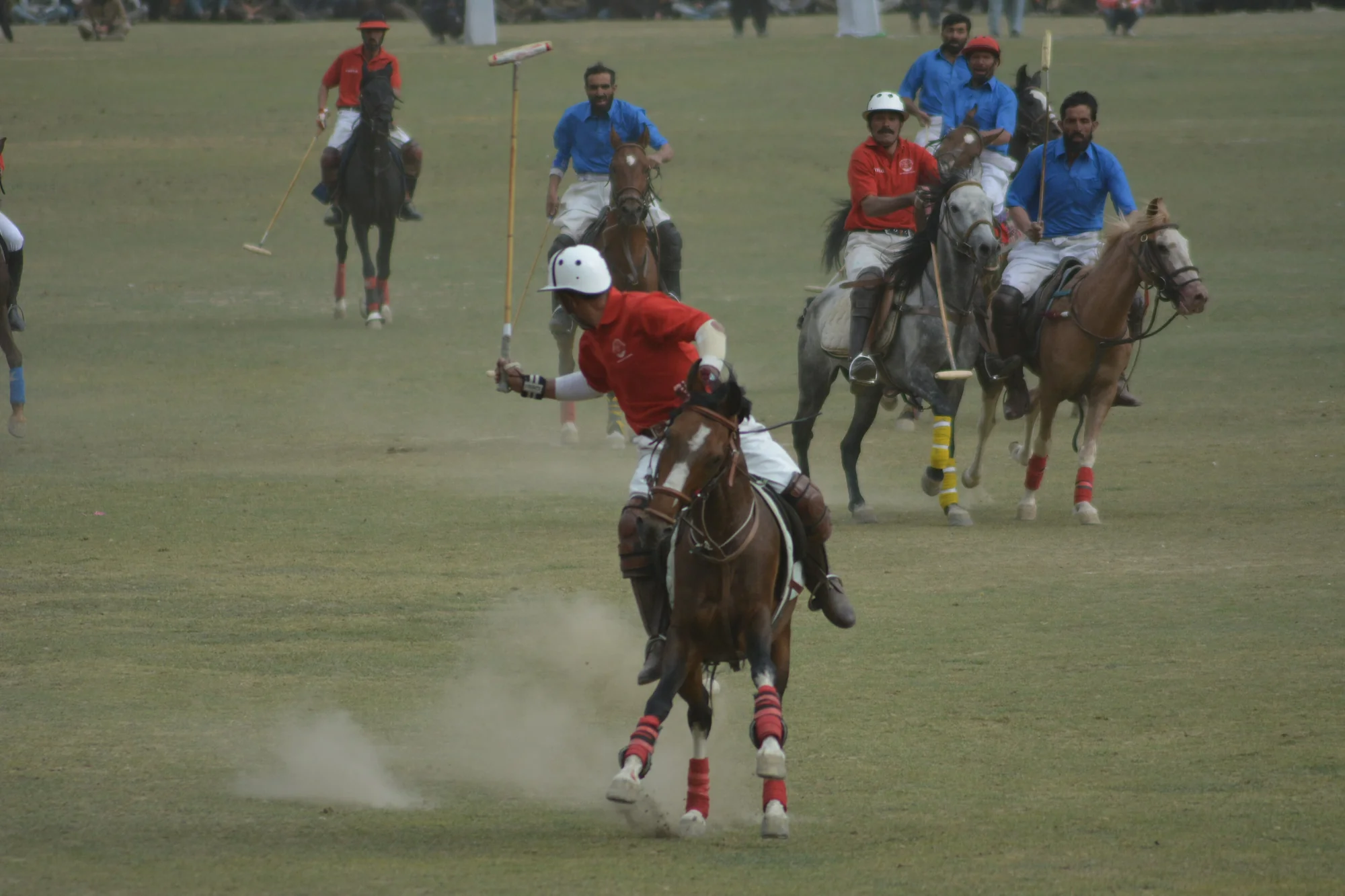
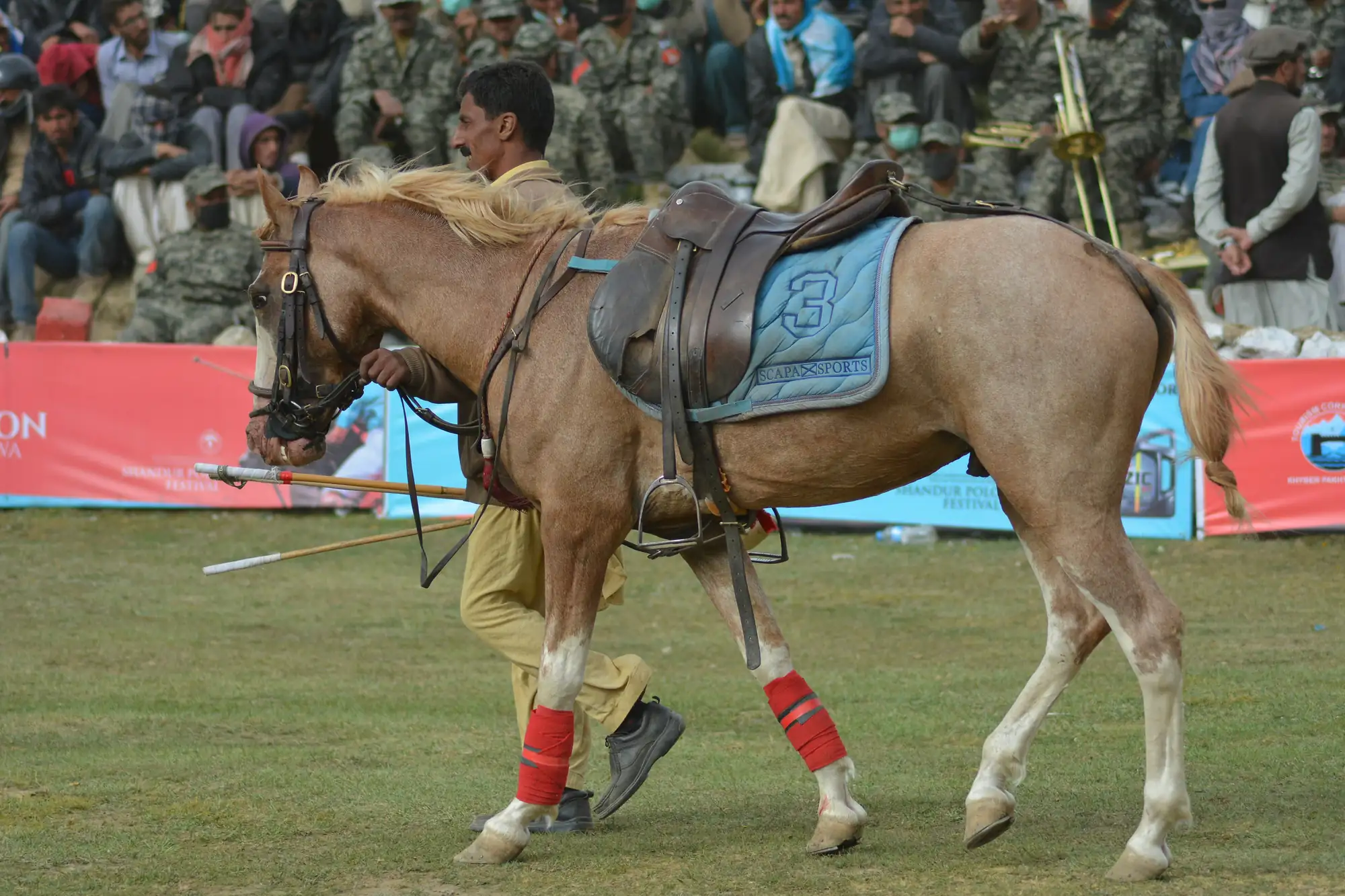
Shandur polo is freestyle in the truest sense. Each side fields six players rather than four, on a ground roughly 200 by 56 metres — smaller than a standard international pitch but crowded with horses and bodies. Stone walls run the length of the field instead of boards; there are no helmets in the traditional style, mallets often lack grips, and horses’ legs may go unbandaged. Head-on challenges that would end a match elsewhere are part of the game here.
Preliminary tournaments in Chitral and Gilgit select the best horses and riders before the festival final on 9 July. Halves last about an hour with a ten-minute break; local musicians and dancers fill the interval. The pace is slower than stadium polo in some ways, yet the terrain and fearlessness make it feel rawer — closer to the sport’s origins as mounted training for real passes like this one.
Road to Shandur Pass from Gahkuch
The route from Gahkuch climbs through Khalti, continues toward Phander’s turnoff, then ascends a series of switchbacks onto the plateau. Distance is roughly 150 kilometres but feels longer — plan four to five hours one way in good conditions, more if mud, snow, or festival traffic intervenes.
Jeep hire from Gahkuch is standard; shared festival convoys exist in July. Drivers who know Shandur’s moods matter: fog can reduce visibility to metres, and snow patches persist beside the track even in August. Night driving on the pass is discouraged.
Many guests arrange transport through Green Palace Hotel rather than negotiating one-off hires in the bazaar — accountability helps when a 4 a.m. departure is on the schedule.
When the Road Opens and Closes
The pass typically opens June through September, with exact timing depending on snow clearance. October crossings happen in mild years but carry risk. Winter closes the route for routine tourism — only specialised expeditions with local knowledge attempt crossings then.
Landslides affect lower sections too, not just the pass itself. Check status in Gahkuch the evening before departure; our seasonal guide to Gahkuch aligns broader weather patterns with pass access.
Best Time to Visit Shandur
July is iconic because of polo, but late June and August also work for landscape-focused trips with thinner crowds. September can be golden — grass browning, air crisp — until an early snow closes the road without warning. For pure scenery without festival logistics, shoulder weeks in August or September suit photographers who accept colder mornings.
Winter visits to Shandur are for specialists only — cross-country skiers, researchers, hardy locals. Casual tourists should not plan cold-season pass crossings.
What to Expect on the Plateau
Shandur is not a viewpoint you admire for ten minutes and leave. The plateau spreads wide; small lakes dot depressions; herders move livestock between seasonal grounds. Walking is the best way to absorb scale — drive to the polo ground, then stroll outward on footpaths that fade into grass.
Facilities are minimal outside festival: a few tea shops in season, no formal visitor centre. Toilets during the festival are basic; off-season, plan accordingly before ascending. Mobile signal is patchy; tell someone your expected return time.
Weather changes within minutes. Blue sky can yield to horizontal sleet in summer — not often, but often enough that unprepared groups retreat early, grumbling. Pack as if the mountain might win an argument with your forecast app.
Altitude and Health
At 3,700 metres, Shandur qualifies as high altitude for anyone arriving from sea level or hot lowland cities. Symptoms — headache, nausea, fatigue — can affect fit travellers who ignored acclimatisation. Spend at least one night in Gahkuch (around 2,000 m) before attempting the pass; two nights is better if coming directly from Gilgit after a flight from Islamabad.
- Move slowly on arrival at the top; skip strenuous hikes the first hour.
- Drink more water than you think you need; limit alcohol the night before.
- Descend if symptoms worsen — do not push through severe headache or vomiting.
- Consider acetazolamide only after consulting a doctor familiar with altitude.
Children and older adults may feel effects sooner. Families with young kids often skip Shandur in favour of Khalti Lake — lower, closer, gentler — detailed in our Khalti Lake guide.
What to Pack for Shandur
Packing lists vary by season, but core items stay constant:
- Insulated jacket or fleece, even in July
- Waterproof shell and trousers
- Hat, gloves, sunglasses, high-SPF sunscreen
- Sturdy shoes with grip — wet grass is slippery
- Snacks, thermos, cash in small notes
- Basic first-aid including pain relief and blister plasters
- Camera batteries — cold drains them faster
Tents and sleeping bags rated for near-freezing nights if camping; most hotel-based visitors skip overnight camping on the pass itself.
Photography Tips for Shandur Pass
Wide lenses capture plateau scale; telephotos isolate horses and riders during polo. Off-season, morning mist and sidelight on tussocks reward patience. Protect gear from dust on jeep windows — roads are dry in high summer and powder-fine dust infiltrates camera bags.
Arrive before sunrise on festival finale day if you want empty foreground grass and soft light on the polo ground. Midday sun is harsh at 3,700 metres; schedule rest during the brightest hours and shoot again in the hour before sunset. Browse our gallery for more mountain and valley reference images from Ghizer.
Combining Shandur with Phander and Khalti
Geography invites loops. A common pattern from Gahkuch:
- Day 1 — Khalti Lake acclimatisation and Gahkuch rest.
- Day 2 — Phander Valley full day; overnight Gahkuch or Phander.
- Day 3 — Pre-dawn departure for Shandur; return by evening.
Reversing order works if festival dates anchor your calendar — arrive Gahkuch, festival day at Shandur, recovery day at Khalti. Our Phander travel guide and Ghizer attractions overview help slot pieces together without overloading any single day.
Festival vs Off-Season Visit
| Factor | During Polo Festival (July) | Outside Festival |
|---|---|---|
| Crowds | Heavy near polo ground | Sparse |
| Accommodation | Book far ahead in Gahkuch | Walk-in usually possible |
| Facilities | Stalls, camps, basic toilets | Minimal — self-sufficient |
| Culture | Music, sport, regional gathering | Landscape focus, solitude |
| Traffic | Jeep jams common | Light |
| Weather risk | Same — always unpredictable | Same — always unpredictable |
Neither mode is objectively better — they serve different travellers. Festival seekers want noise and polo; purists want empty grass and silence. Pick honestly; trying to have both in a single rushed day usually satisfies neither.
Recovering Back in Gahkuch
Long pass days end best with hot food and a proper bed. Green Palace Hotel in Gahkuch puts you two to five hours from Shandur depending on conditions — close enough for day trips, far enough that you sleep at workable altitude. The restaurant serves hearty meals that matter after a windy plateau afternoon when picnic snacks were not enough. Between pass days, lower-altitude outings near the hotel help with recovery.
The Chitral Connection
Shandur sits on a historic route linking Ghizer to Chitral district in Khyber Pakhtunkhwa. Some adventurous itineraries cross the pass and continue west toward Mastuj and Chitral town rather than returning to Gahkuch — multi-day affairs requiring spare fuel, border-area awareness, and drivers licensed for the full corridor. Most hotel-based visitors from Gilgit-Baltistan treat Shandur as a round trip from Gahkuch, which simplifies logistics and keeps you near established support if weather turns.
Safety and Emergencies
Medical facilities on the plateau are essentially absent outside festival medical tents. Serious issues require descent to Gahkuch or Gilgit. Carry a basic first-aid kit, know your blood type if relevant, and travel with a phone that has emergency contacts saved offline. Tell your hotel expected return time before departing — staff notice when jeeps have not checked in by evening.
FAQs
How high is Shandur Pass?
Approximately 3,700 metres (12,200 feet) above sea level — high enough to cause altitude symptoms without acclimatisation.
When is the Shandur Polo Festival?
Usually around 7–9 July each year, but dates vary. Confirm with local tourism offices before fixing travel plans.
Can I visit Shandur in a regular car?
Jeep or high-clearance SUV is strongly recommended. Sedans occasionally reach the plateau in perfect dry conditions but risk damage and getting stuck.
Is Shandur suitable for children?
Older children acclimatised to altitude can enjoy festival day with warm clothing and realistic expectations. Toddlers and long drives plus cold wind are a difficult combination.
Where should I stay for Shandur trips?
Gahkuch is the practical base — Green Palace Hotel arranges early departures and drivers familiar with pass conditions.
Shandur Pass is not a casual add-on — it is a commitment of time, warmth, and reasonable fitness. Treat it that way and the plateau repays you with space rare in modern travel: grass underfoot, sky close enough to touch, and on the right July afternoon, the crack of polo mallets echoing off hills that have watched games for generations.
When your dates firm up, contact us for room availability and driver arrangements. Shandur rewards preparation; we help with the practical side so you can focus on the view.
Planning a trip to Ghizer Valley?
Stay at Green Palace Hotel in Gahkuch and enjoy comfortable rooms, beautiful mountain views, delicious local food, free WiFi and easy access to Phander Valley, Khalti Lake and Shandur Pass.
Related Articles
Why Green Palace Hotel is the Best Hotel in Gahkuch
A balanced review of Green Palace Hotel Gahkuch covering rooms, dining, amenities, and who it suits best—without the sales pitch.
Read More
Things to Do Near Green Palace Hotel in Gahkuch
From Khalti Lake to Phander Valley and Shandur Pass—what to do near Green Palace Hotel in Gahkuch with realistic drive times and…
Read More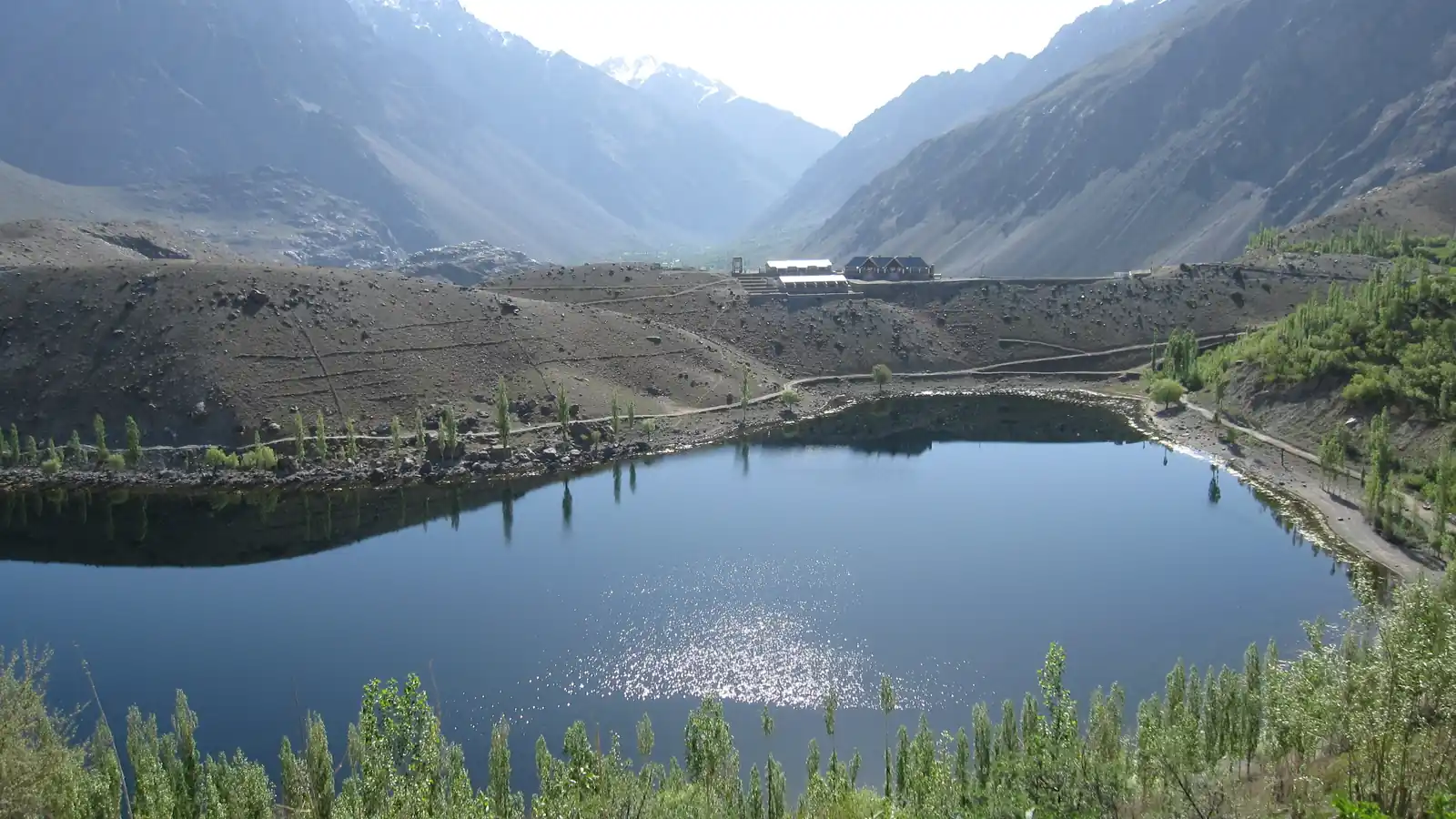
Family Vacation in Ghizer Valley: A Complete Guide
How to plan a family vacation in Ghizer Valley—from drives and altitude to kid-friendly lakes, hotel tips, and a sample five-day itinerary…
Read More